
Amy Atkinson
Founder & Esthetician
In 24 years of working with clients, the question I get more than almost any other isn't "what should I be using?" — it's "what order do I put everything on?" People have good products sitting on their shelves. They're applying them in the wrong sequence, layering things that cancel each other out, or skipping a step that makes everything after it less effective. The products aren't the problem. The framework is.
Why Product Order (Dermal Layering) Actually Matters
Skin absorbs in layers — and it can only absorb what reaches it. Apply a rich moisturizer before your serum and the serum never fully penetrates. Apply an active on skin that hasn't been properly prepped and you're cutting its efficacy before it starts. Dermal layering isn't a technicality. It's the reason two people using the same products can get completely different results.
The general rule is thinnest to thickest — water-based products first, actives next, then moisturizer. But here's where it gets more nuanced: some actives should go on dry skin, others on damp. Some ingredients conflict with each other entirely. Some serums need to be buffered; others shouldn't touch a retinol within the same routine. This is where most DIY routines silently fail — not on the order itself, but on what belongs in each slot.
The Framework Is Simple. What Fills It Is Not.
A basic AM routine moves through cleanse → prep → active serum → moisturizer → SPF. A PM routine is cleanse → treatment → active → moisturizer. That structure is consistent. What changes completely from person to person is what goes in each step. The serum slot alone — do you need Vitamin C, niacinamide, hyaluronic acid, a peptide, an acid? — depends on your skin type, your concerns, your climate, your age, what you're already using, and what your skin is doing right now. Getting that wrong doesn't just waste the product. It can actively set your skin back.
One Active at a Time — and Here's Why
One of the most common things I see: a client adds a retinol, a glycolic acid, and a new Vitamin C within the same month and then can't understand why their skin is reacting. When you introduce multiple actives at once, you lose the ability to know what's helping, what's causing irritation, or what to keep. More importantly — not every active is right for every skin at every stage. Whether you're ready for a retinol, which strength, and when to introduce it is a judgment call that takes more than a product label to answer correctly.
When Your Routine Plateaus
Plateauing is normal — but it's also a signal. It usually means one of two things: you've gotten what that active can deliver at its current level, or your skin has shifted and the protocol hasn't kept up. Most people either push through and see nothing change, or start adding products hoping something sticks. Neither works. A plateau is information. Reading it correctly is where experience matters.
What We Actually Do for Every Client
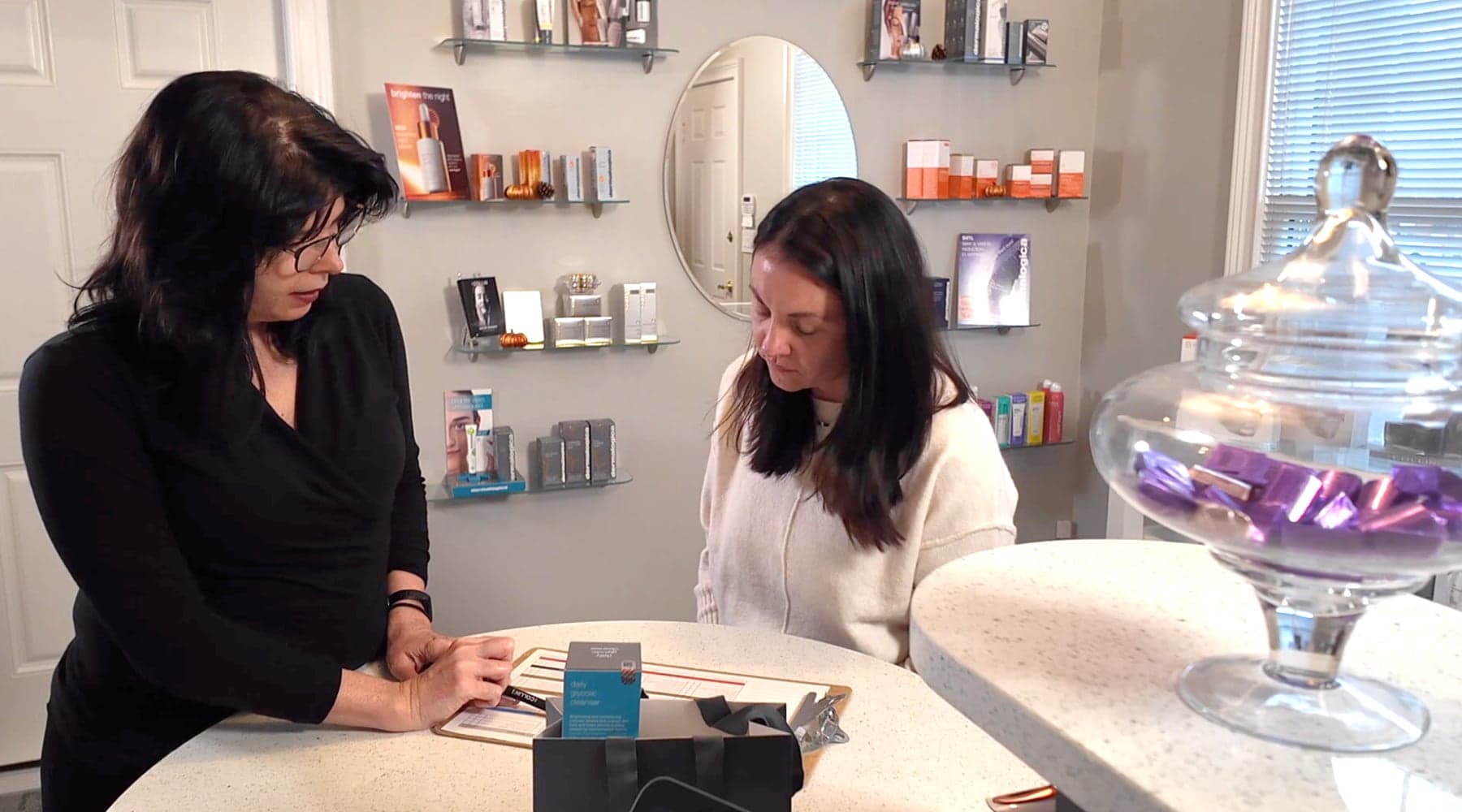
After every appointment, we email you your home care routine — step by step, product by product, with the what, the when, and the why for each step. Not generic advice. Your specific routine, written out so nothing is left to interpretation. Most clients tell us it's the first time their routine has ever fully made sense.
And we revisit it every time you come back. Your skin changes with the seasons, with stress, with your cycle, with age. What worked six months ago may need to shift. We're not starting over at each visit — we're building on what we know about your skin and adjusting ahead of the problems, not after them. You're not figuring this out alone.
Ready to Have a Routine That Actually Makes Sense?
New clients start with a comprehensive intake — a real conversation about your skin, your current products, and your goals. You leave with a written, personalized home care plan. Not local? Ask about Virtual Skincare Coaching.